
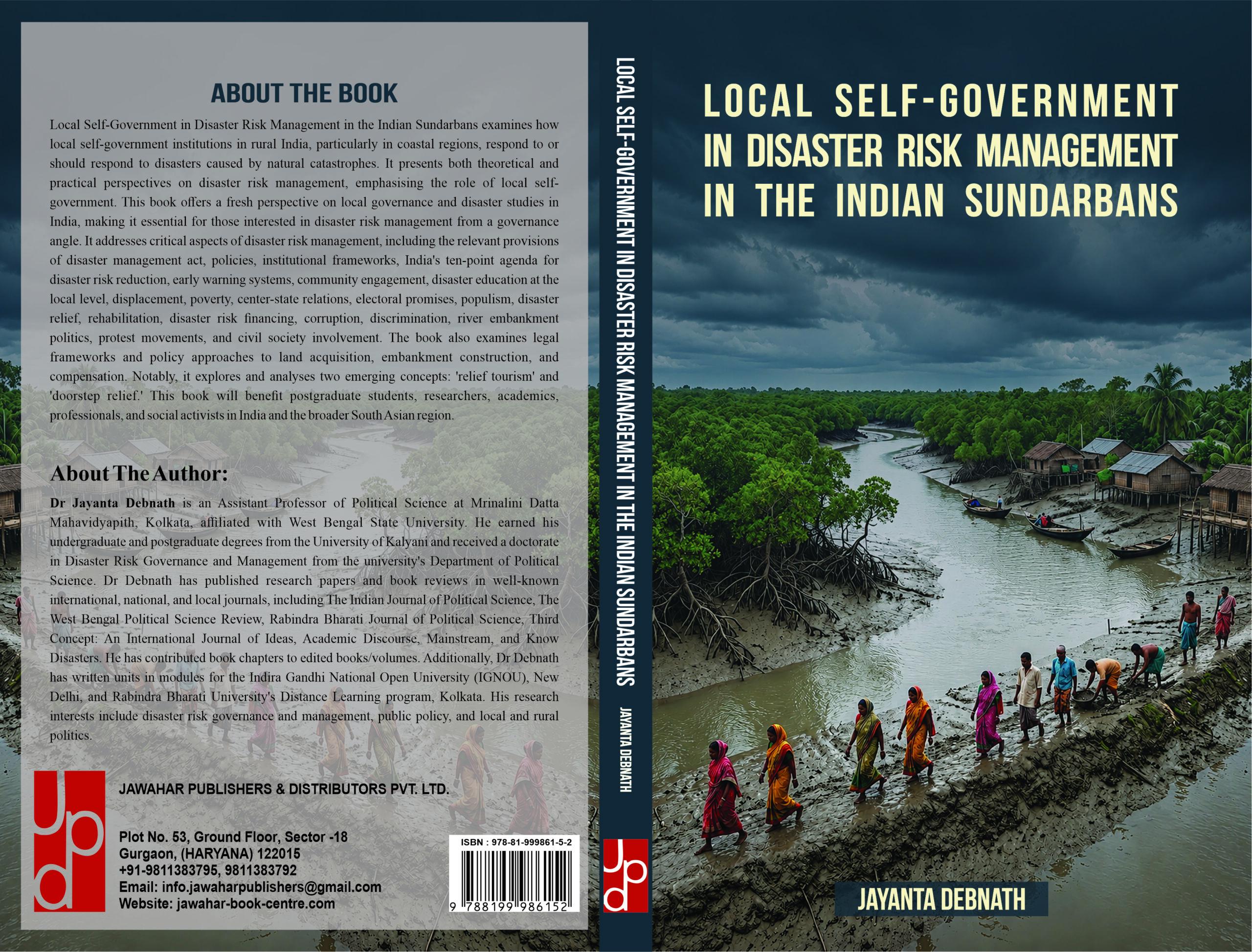
Description
Local Self-Government in Disaster Risk Management in the Indian Sundarbans examines how local self-government institutions in rural India, particularly in coastal regions, respond to or should respond to disasters caused by natural catastrophes. It presents both theoretical and practical perspectives on disaster risk management, emphasising the role of local self-government. This book offers a fresh perspective on local governance and disaster studies in India, making it essential for those interested in disaster risk management from a governance angle. It addresses critical aspects of disaster risk management, including the relevant provisions of disaster management act, policies, institutional frameworks, India’s ten-point agenda for disaster risk reduction, early warning systems, community engagement, disaster education at the local level, displacement, poverty, center-state relations, electoral promises, populism, disaster relief, rehabilitation, disaster risk financing, corruption, discrimination, river embankment politics, protest movements, and civil society involvement. The book also examines legal frameworks and policy approaches to land acquisition, embankment construction, and compensation. Notably, it explores and analyses two emerging concepts: ‘relief tourism’ and ‘doorstep relief.’ This book will benefit postgraduate students, researchers, academics, professionals, and social activists in India and the broader South Asian region.


Reviews
There are no reviews yet.